










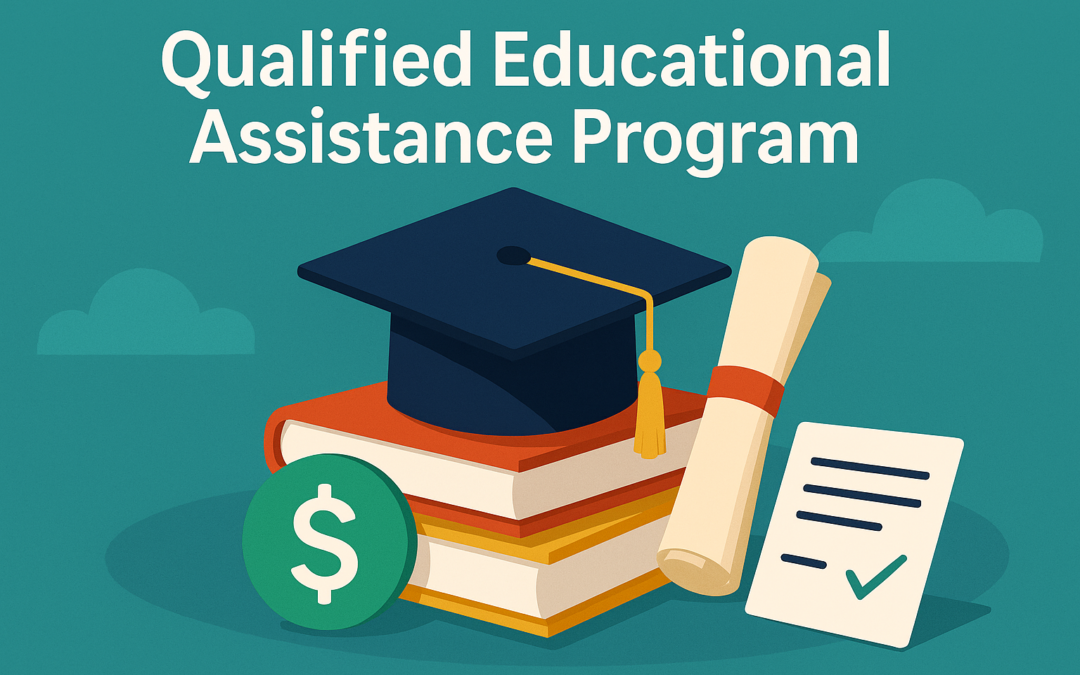
If your employer offers help paying for education, it’s often through something called a Qualified Educational Assistance Program (QEAP). But what exactly does that mean—and what can you have reimbursed?
This guide breaks it down in simple terms so you can take full advantage of this valuable benefit.
What Is a Qualified Educational Assistance Program?
A Qualified Educational Assistance Program (QEAP) is an employer-sponsored benefit that helps pay for your education. Under IRS rules, it allows your employer to provide tax-free education assistance up to $5,250 per year.
✅ What makes it special?
- You don’t pay federal income tax on eligible reimbursements (up to the limit)
- Your employer can cover a wide range of learning opportunities
- The education does not have to be job-related in most cases
What Expenses Can Be Reimbursed?
Depending on your company’s plan, a QEAP may cover:
- Tuition and required fees
- Books and course materials
- In some cases, student loan payments
✅ The education does not have to be related to your current job, so you have flexibility to pursue different interests or career goals.
What Is Not Covered?
Some expenses are not eligible, including:
- Meals, transportation, and lodging
- Most hobby or recreational courses (unless required for a degree or job-related)
- Supplies or equipment you can keep after completing the course (except textbooks)
Important Rules to Remember
- Up to $5,250 per year is tax-free
- Your employer may set requirements, such as:
- Getting course approval in advance
- Attending approved schools or programs
- Earning a minimum grade
Bottom Line
A QEAP is a valuable benefit that helps you save on education costs while growing your skills. To make the most of it, review your company’s specific rules and get any needed approvals before enrolling.
Source: Thomson Reuters