











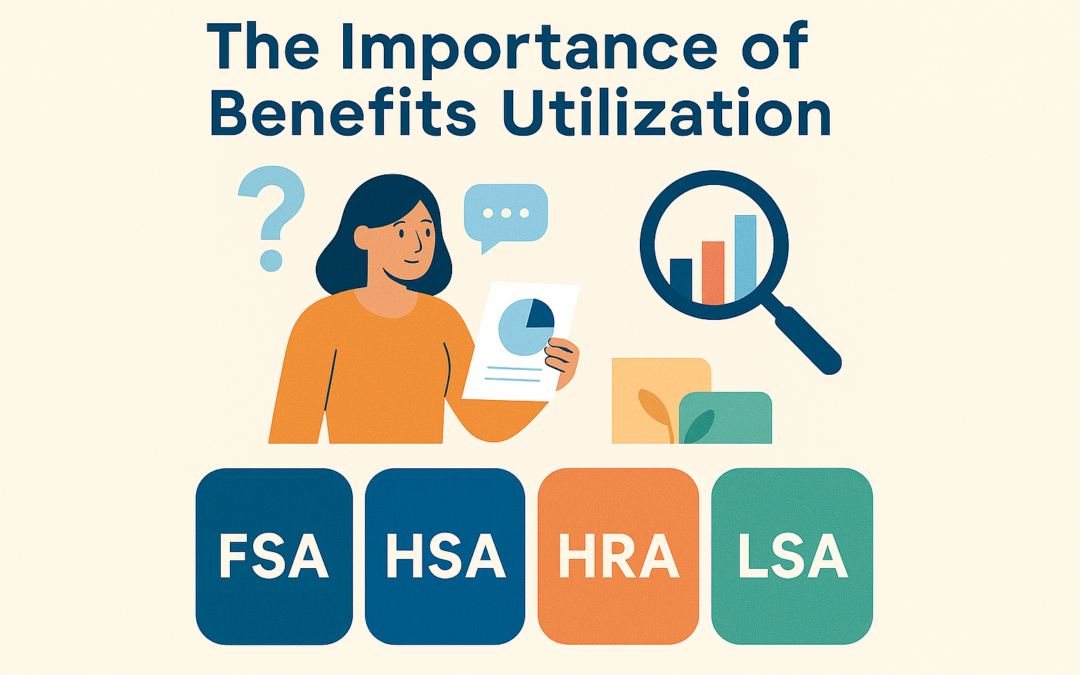
As Q1 comes to a close, employers are taking a closer look at their benefits to see what’s working, what’s not being used, and how to better support employees. With rising costs and evolving expectations, benefits strategies are shifting toward flexibility, personalization, and real utilization—especially when it comes to FSAs, HSAs, HRAs, and LSAs.
Why Utilization Matters
Unused benefits don’t just represent wasted spend—they reduce the perceived value of a company’s total rewards package. When employees don’t understand how to use their benefits or don’t see how they apply to their lives, engagement suffers.
That’s why employers are using Q1 as a checkpoint to reassess how well their benefits are actually performing.
How Employers Can Analyze Their Benefits
A smarter benefits strategy starts with data. Employers can begin by reviewing:
- Enrollment vs. usage: Are employees signing up for FSAs, HSAs, HRAs, or LSAs—but not spending the funds?
- Average balances and reimbursements: Do accounts sit unused or spike only at year-end?
- Employee demographics and life stages: Are benefits aligned with workforce needs like caregiving, wellness, or long-term savings?
- Employee feedback and questions: What benefits cause confusion or go unused year after year?
This analysis helps identify gaps in education, communication, or relevance—and highlights opportunities to redesign benefits for better outcomes.
The Shift Toward Personalized Benefits
One-size-fits-all benefits no longer meet the needs of today’s workforce. Employers are increasingly offering a mix of accounts so employees can choose what fits them best:
- FSAs for predictable healthcare or dependent care expenses
- HSAs for long-term healthcare and retirement savings
- HRAs to complement health plans with targeted reimbursements
- LSAs for lifestyle, wellness, and everyday flexibility
Personalized benefits lead to higher engagement and stronger employee satisfaction.
The Q1 Takeaway
Benefits that are easy to understand, relevant, and flexible are the ones that get used. And benefits that get used create happier employees and stronger retention.
As employers move into Q2, those who regularly analyze benefits performance—and adjust accordingly—will see the greatest value from their investment.