











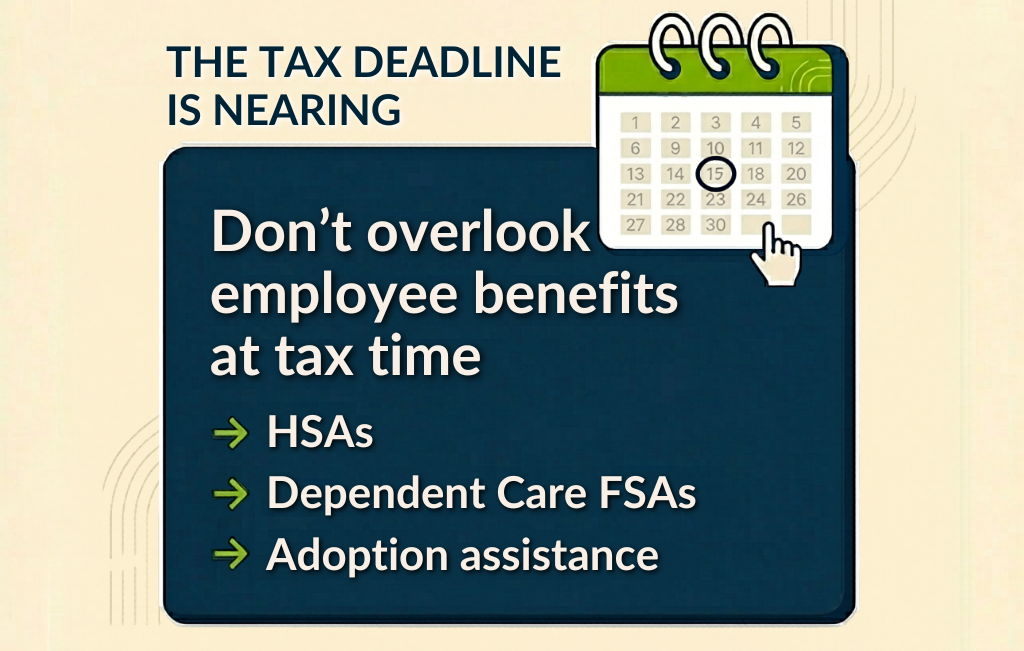
Tax season sneaks up fast, and with the tax deadline right around the corner, it’s easy to forget that some employee benefits come with extra tax forms. If you used certain health or family‑related benefits this year, the IRS may expect a little more information when you file.
The good news? Only a few benefits actually need tax forms. Here’s a quick, simple breakdown.
Used an HSA? You’ll Need to File a Form
If you contributed to a Health Savings Account (HSA) or used HSA money for medical expenses, you’ll need to report it on your tax return.
Forms you may see:
- Form 1099‑SA – Shows how much money you took out of your HSA
- Form 5498‑SA – Shows how much money went into your HSA (for reference)
- Form 8889 – This form must be filed with your tax return
Even if you didn’t spend your HSA money, Form 8889 is still required if you made contributions.
Have a Dependent Care FSA? There’s a Form for That
If you used a Dependent Care FSA to pay for childcare or care for an adult dependent, this benefit must be reported.
Form you’ll need:
- Form 2441 – Dependent Care Expenses
This form helps the IRS make sure your dependent care benefits are reported correctly.
Helpful reminder: Healthcare FSAs do NOT require tax forms—only Dependent Care FSAs do.
Employer Helped With Adoption Costs?
If your employer provided adoption assistance, the IRS requires you to report it.
Form you’ll need:
- Form 8839 – Qualified Adoption Expenses
This form shows how adoption‑related benefits affect your taxes.
Quick Check Before You File
Before you hit “submit,” make sure you have tax forms for:
- HSA contributions or withdrawals
- Dependent Care FSA expenses
- Adoption assistance benefits
Having the right forms ready can help you avoid filing delays, errors, or IRS follow‑ups.